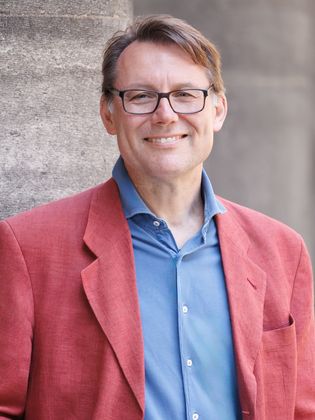
Univ.-Prof. DDr.
Kurt Appel
Professor für Religionsphilosophie und Theologische Grundlagenforschung (Fundamentaltheologie) am Institut für Systematische Theologie und Ethik der Katholisch-Theologischen Fakultät der Universität Wien
Sprecher des Forschungszentrums "Religion and Transformation" (Universität Wien)
Aktuelles
2026
Catholic Theology, Church, and Global Culture Today: Crises, Perspectives, Tasks
Kurt Appel / Jakob Deibl / Isabella Guanzini / Marcello Neri
in: John Anthony Berry / Kevin Schembri (Eds.), Beyond Certainty. Reimagining Faith in a Changing World. Volume 1
Malta University Press: Msida, Malta 2026, 41-62
This article is a modified version of a contribution featured in ET Studies 14/2 (2023), 223-240.
Beyond Certainty, Volume One examines how Christian theology and ecclesial life can respond to the profound cultural, social, and religious transformations of the contemporary world. In contexts increasingly marked by secularisation, fragmentation, and scepticism toward institutions, the volume proposes a theological imagination capable of engaging uncertainty while remaining rooted in faith. The contributions are organised around three themes: Reframing Theology, Becoming Church, and Journeying Together. The first section explores theology’s role in contemporary culture, offering renewed approaches to catechesis, religious education, mission, and evangelisation. The second reflects on ecclesial identity, ministry, leadership, pastoral conversion, and prophetic witness in a changing Church. The final section examines synodality as a path of listening, discernment, participation, and renewal. Together, the essays present faith not as a retreat into certainty, but as a creative, dynamic and hopeful engagement with contemporary realities.
Die biblische Subversion des Krieges. Ironie und Opfer als biblischer Beitrag zu einem europäischen Friedensnarrativ
Kurt Appel
in: Gunda Werner / Matija Vudjan / Kathrin Ritzka (Hrsg.), Legitimität der Moderne. Historische, rechtliche und systematisch-theologische Reflexionen
Springer Verlag: Wiesbaden 2026, 342-362
In diesem Band liefern renommierte Wissenschaftler:innen in vier großen Blöcken zum Thema Legitimität der Moderne kontroverse und erhellende Beiträge, die in ihrer Vielschichtigkeit dieses Feld beleuchten werden.
Zwischen den Disziplinen der systematischen Theologie, des (Kirchen-)rechts, der Kirchengeschichtswissenschaften besteht ein spannungsvolles Verhältnis, wenn es um die Frage der Geltung und Genese von Moderne geht. Gibt es ‚die‘ Moderne? Wann fängt sie an? Welche Legitimität hat ein solches Konzept? Nicht nur an der Frage der Sattelzeit sowie der Epocheneinteilung scheiden sich die akademischen Geister, sondern auch in den theologischen Debatten kommt im Anspruch der Dogmatik, wahrheitsverpflichtete Hermeneutik zu sein, zudem der Problemhorizont hinzu, wie sich dieser Anspruch fassen und geltend machen lässt. Hier ist das ‚natürliche‘ Gegenüber die jeweilige Rechtsgestalt. Wie allerdings gestalten sich dann Geltung und Genese von Wahrheit, Offenbarung und Recht? Diese Fragen finden ihre Ursprungskonfliktlinien insbesondere im 18./19. Jahrhundert, Konfliktlinien, die sich im 20. und 21. Jahrhundert durchtragen, aber doch auch weit in die Jahrhunderte vorher reichen. Dies sind theologische Fragen, sie finden ihre Resonanzräume jedoch ebenso, aufgrund der Themen oder der Überschneidungen, in anderen Fächern.
The Qu'ran as a Gospel for Christians.
What Christians can Learn from the Qu'ran about Trinity, Jesus, and the Holy Spirit
Kurt Appel
Interdisciplinary Journal for Religion and Transformation in Contemporary Society (2026), 1-28
doi:10.30965/23642807-bja10150
In the joint declaration of Abu Dhabi, Pope Francis and Grand Imam Ahmad Mohammed Al-Tayyeb spoke together in the name of God. In view of the outstanding significance of the name of God and the permanent relevance that Islam has gained in human history, the article demonstrates that the Qu’ran also holds meaning in terms of salvation history for Christianity and can therefore be regarded as good news, i.e. gospel, for Christians. As a consequence, the dogmatic heritage of Christianity must be interpreted not only in light of the Torah and the Jewish tradition, but also in light of the Qur’an. This includes the Trinitarian confession of God as well as Christology and Pneumatology. Thereby it becomes apparent that while Christianity and Islam cannot be unified, they are mutually interdependent and that with the help of the other, one’s own heritage can be understood more profoundly.